
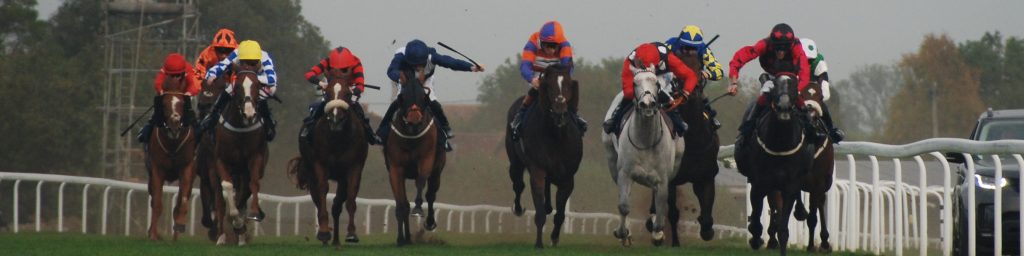
As the weather starts to cool and we are greeted with misty mornings, I thought it would be interesting to explain how the weather can affect racing and why trainers, jockeys and racecourses pay so much attention to it.
This summer has been a constant heatwave and, as someone who has worked with horses, I can safely say it was not particularly enjoyable! It meant starting early in the morning to try to beat the heat for the horses, as well as spending plenty of time running under hosepipes to make it a little more bearable.
The heat hasn’t just affected the people and horses working behind the scenes, though. There have also been incidents on racecourses that have highlighted some of the challenges that extreme weather can bring. One of the more serious examples was at Haydock, where a hole appeared on the outer course during a race, resulting in Friendly Soul tripping and the jockey falling off. Thankfully, no one was injured, although it was understandably a frightening incident. The clerk of the course came under a great deal of scrutiny, and racing was affected while repairs were carried out.
It wasn’t just the clerk of the course at Haydock who has been under pressure. Every clerk of the course has a huge responsibility, particularly those working at tracks hosting some of the biggest festivals of the summer. They have to make sure the ground is safe and suitable for racing, while also dealing with whatever weather Mother Nature decides to throw at them.
So, why does the weather matter so much?
Let’s get down to the basics and look at why the weather has such an impact on racing.
One of the biggest factors is the going — essentially, how firm or soft the ground is. Rain can make the ground softer and heavier, which can have a huge effect on how a race is run. Horses may have to work harder through softer ground, meaning stamina can become particularly important.
On the other hand, faster ground can allow horses to travel at greater speed. This is one reason why you’ll often hear trainers, jockeys and commentators talking about whether a horse “handles the ground”.
There isn’t one type of going that every flat horse or every National Hunt horse prefers. It comes down to the individual horse. Some horses thrive on soft ground, while others are at their best when the ground is quick. The same applies to National Hunt and Flat racing. The ideal conditions can vary depending on the horse, the distance of the race and even the course itself.
It’s not just the trainers who have an opinion
There is also a difference between how trainers, jockeys and, most importantly, the horses respond to different conditions.
At the end of the day, horses aren’t machines that can simply be switched on and told to run. They are living, breathing animals, and they all have their own preferences and characteristics.
At the end of a race, you will often hear a jockey or trainer explain that their horse “didn’t handle the ground”. It doesn’t necessarily mean the horse wasn’t fit or hadn’t trained well. Sometimes the conditions simply aren’t what that particular horse prefers.
Of course, some horses are incredibly adaptable and can perform well across a range of conditions. That versatility can be a huge advantage, particularly when the weather is unpredictable.
Rain, wind and different surfaces
Rain affects different racing surfaces in different ways.
On a dirt track, rain can create sloppy or muddy conditions, which can significantly change how a race is run. On an all-weather track, rainfall can also alter the surface and the way horses get their grip. Turf is particularly sensitive to rainfall, drainage and wear. How much rain a course has received, how well the ground has drained and how much racing has taken place on it can all influence the condition of the track.
And then there is the wind.
A strong headwind can make life harder for horses, particularly those racing prominently, while a tailwind can potentially help horses travelling behind others. Even something as simple as the direction and strength of the wind can therefore influence how a race unfolds.
This is why going reports are so important. What might look like a perfectly normal racecourse to us can actually provide a huge amount of information to trainers and jockeys.
What about the National Hunt season?
After the summer we’ve had, one question I keep coming back to is: will the racecourses be ready for the National Hunt season?
As I’m writing this in October, it’s still around 20 degrees. That is not exactly the sort of weather you imagine when you think about the beginning of the National Hunt season!
It makes you wonder whether some fixtures could be affected if the ground doesn’t develop in the way racecourses expect. And, once again, it puts a huge amount of pressure on the clerks of the course.
A couple of months ago, I was shown a photograph of a racecourse that was so dry it looked like a crop field. I was asked if I could guess which racecourse it was.
Luckily, I’m a big fan of this particular racecourse and know it pretty well, so I managed to get it right.
It was Cheltenham.
The course was dry, yellow and almost unrecognisable compared with the green, muddy Cheltenham we are used to seeing during the National Hunt season.
The next question was the obvious one: how is that ever going to be ready for all the racing that is just around the corner?
And that is the interesting thing about racing. The weather might seem like something completely outside of the sport’s control, but it can have an enormous impact on everything from the horses themselves to the ground, the racecourses and whether fixtures can even go ahead.
So, as we head towards another National Hunt season, I’ll certainly be keeping an eye on the weather — and spare a thought for the clerks of the course who have the unenviable job of making sure those yellow racecourses are ready to become the green, muddy tracks we all know and love.
I’m definitely not jealous of them!


Leave a comment